


A collaborative sound and light installation where visitors become researchers studying an alien crystal with sound.
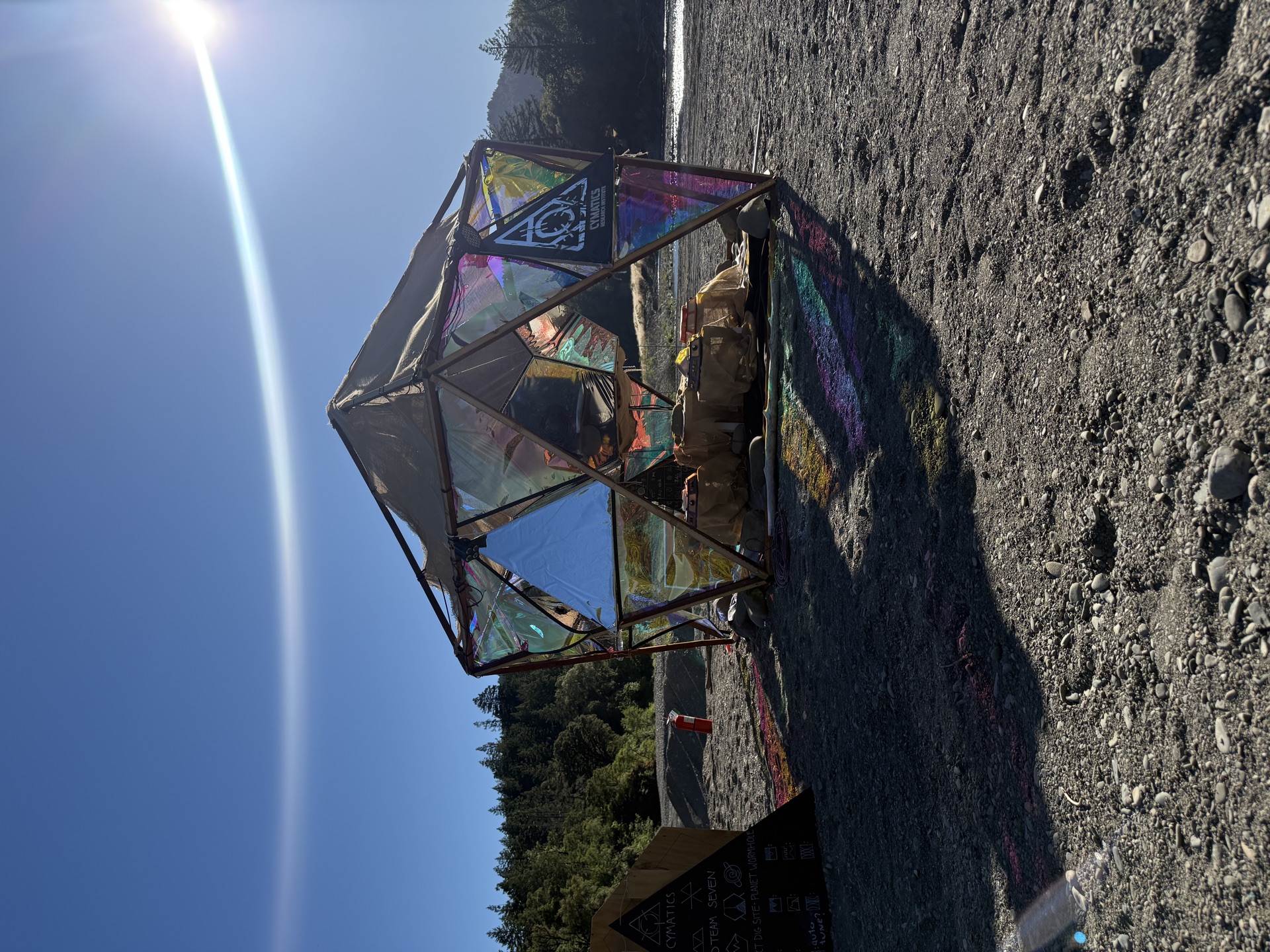
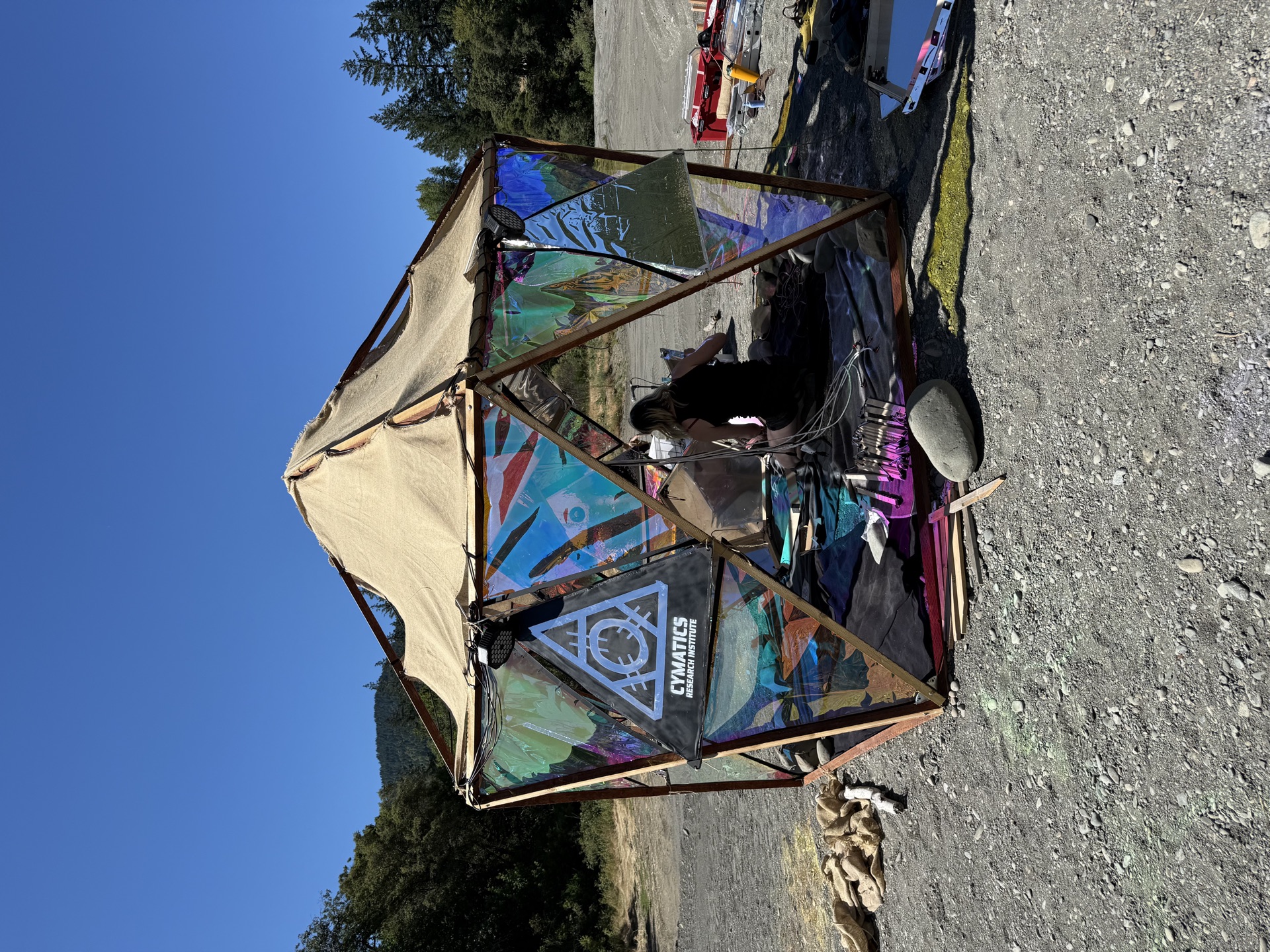
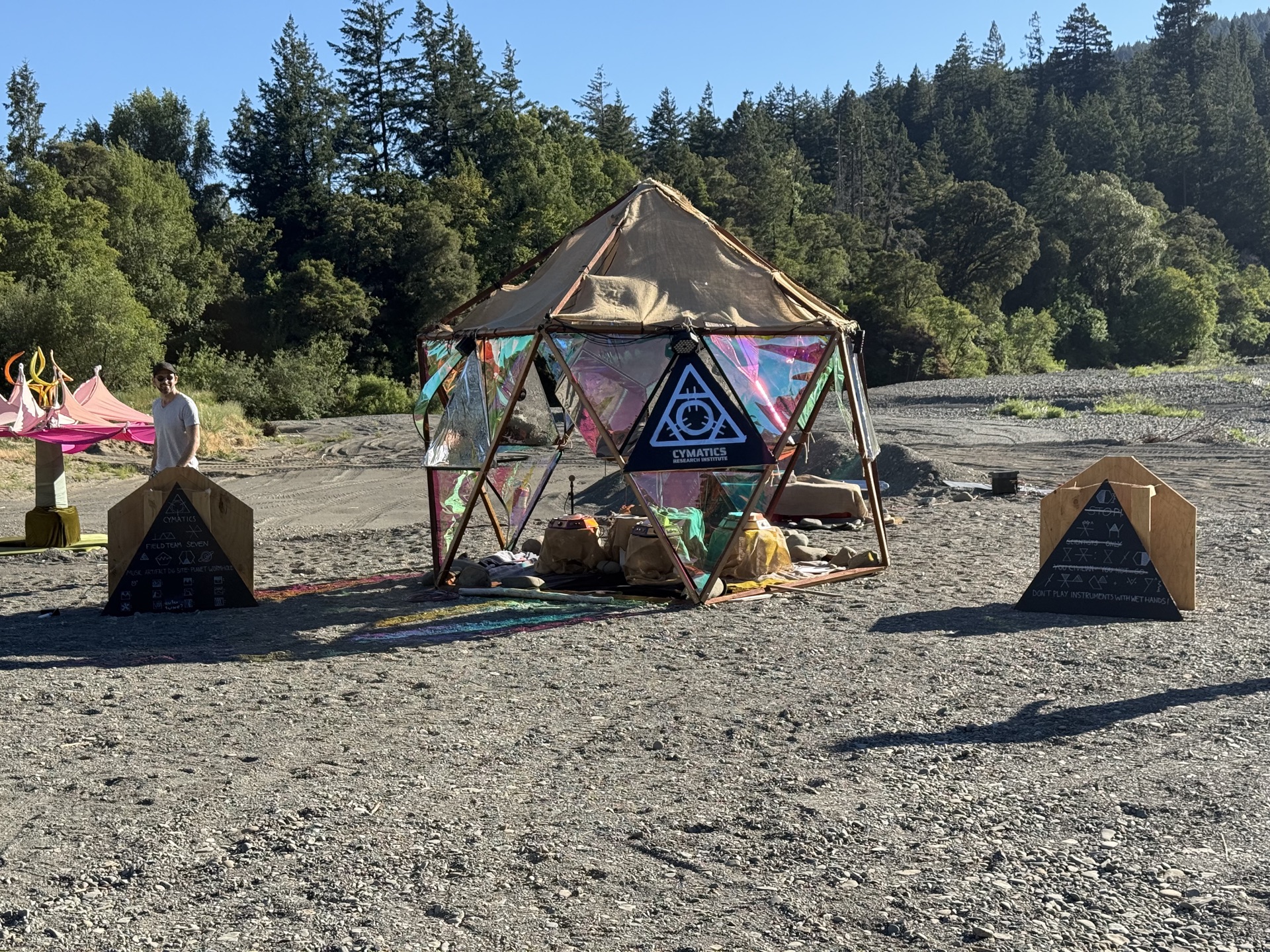
An alien crystal was spat out of a wormhole. Inside a geodesic research dome, a mirrored dodecahedron hangs at eye level, with light running along all of its edges. Visitors step in as researchers at the Cymatics Research Institute and study the crystal with sound. Every note makes light race across its edges.
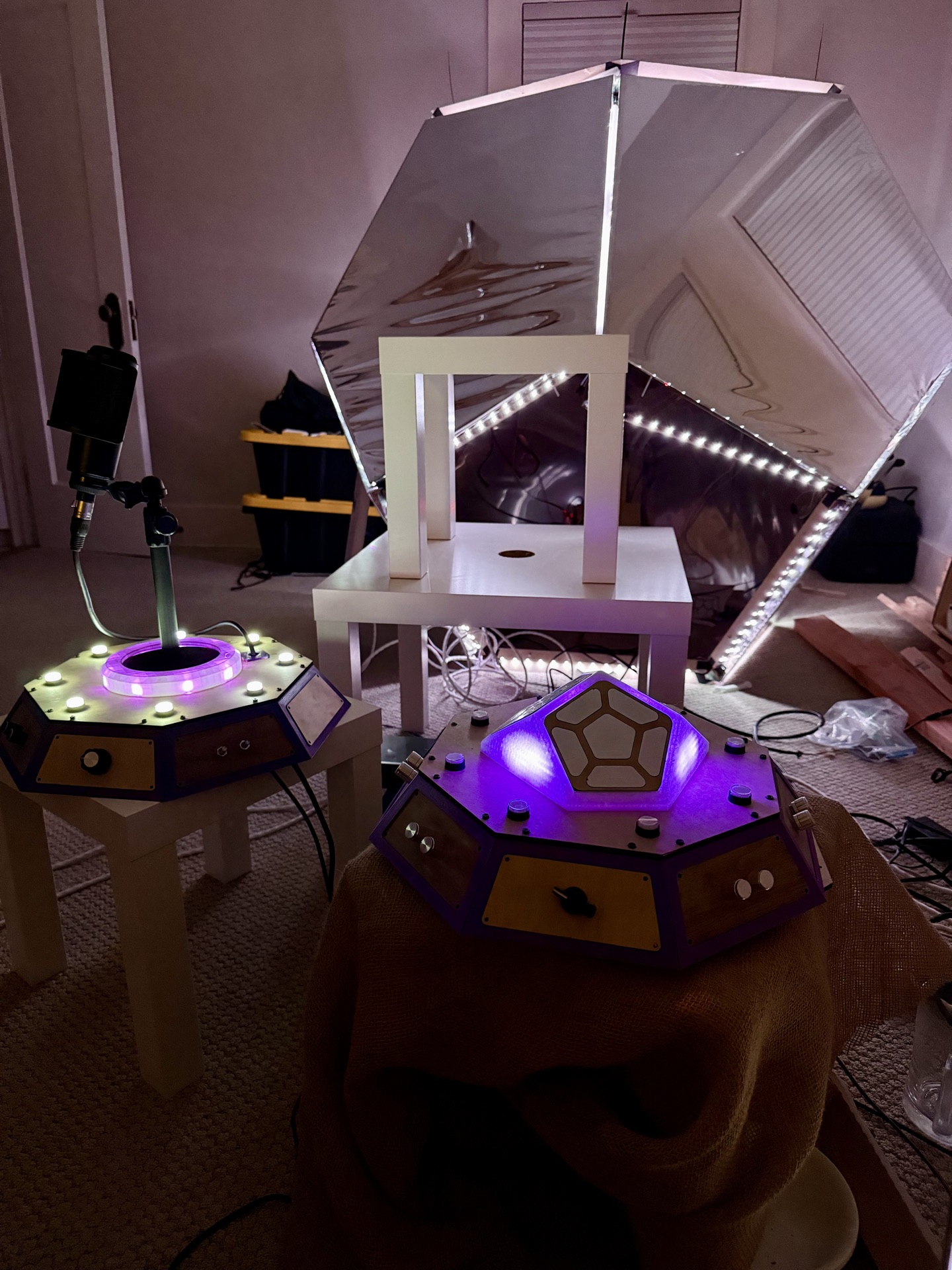
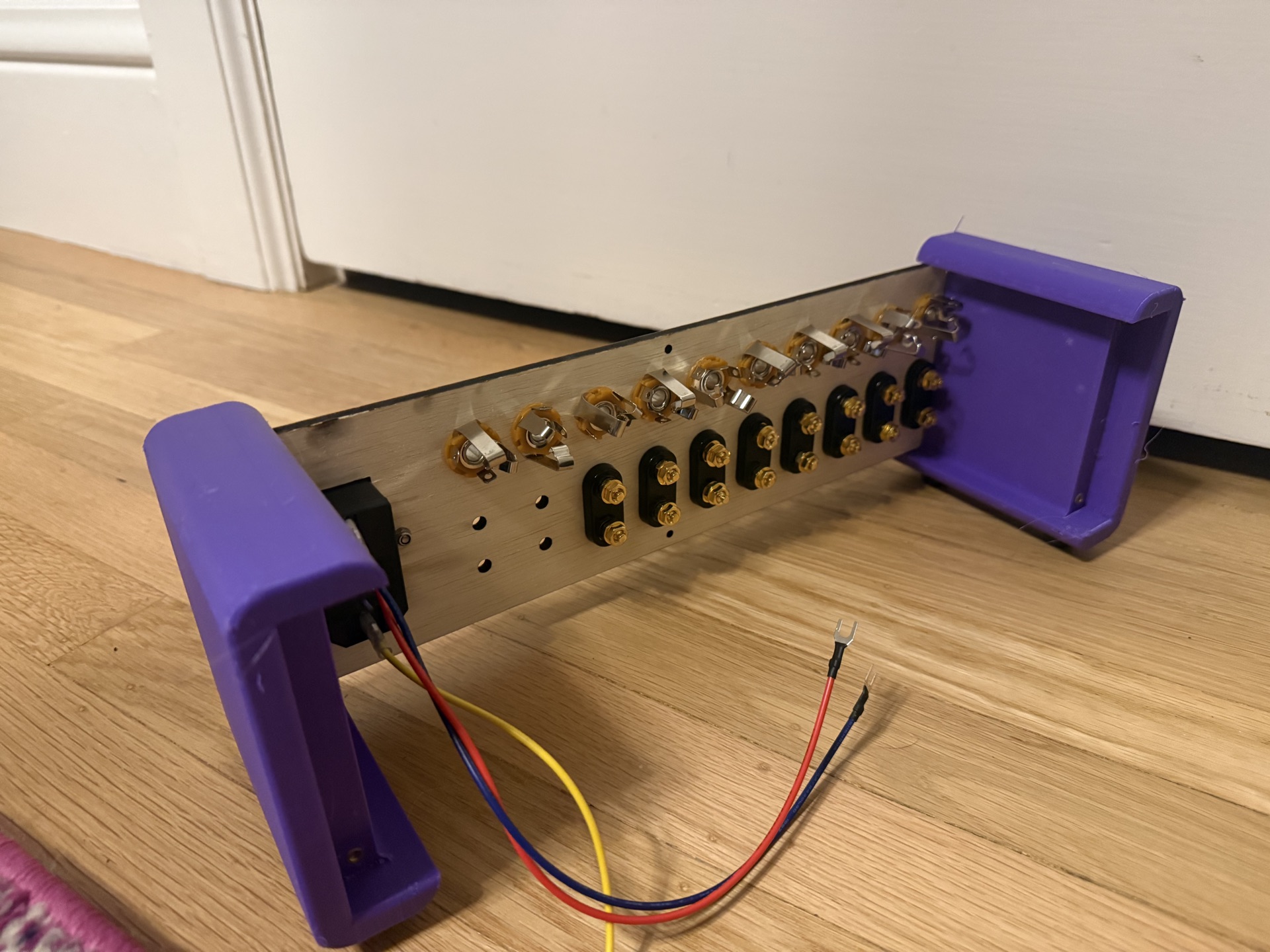
Three handbuilt consoles surround the crystal. Each one has strange controls and no instructions. People walk up, start pressing things, and work out what the instruments do by ear. Then they notice someone at the next console and start to play together.
The idea came from a problem I ran into with an earlier installation, The Organ Of No Body. Its two facing keyboards were lovely to play, but a keyboard is not a neutral object. People who did not think of themselves as musicians often felt shy about touching it. So this time I wanted to build instruments that felt alien to everyone. Whoever walked up would start from the same place and learn how they worked from scratch.
That gave the project two goals. The first was discovery: the fun of figuring out a strange interface, pressing something, and slowly learning what it does. Each instrument has one obvious way to make a sound, with more depth to find the longer you play. The second goal was connection, the quiet, wordless kind that happens when friends and strangers play the three instruments together and start listening to each other.
The three instruments share a common design language, so what you learn on one carries over to the next. Once you understand one console, the others feel familiar.
We added one more layer of discovery: a hidden puzzle. The symbols on the controls form a small made-up language, in the spirit of the game Chants of Sennaar. Anyone who took the time to decode the symbols could work out what each control did.
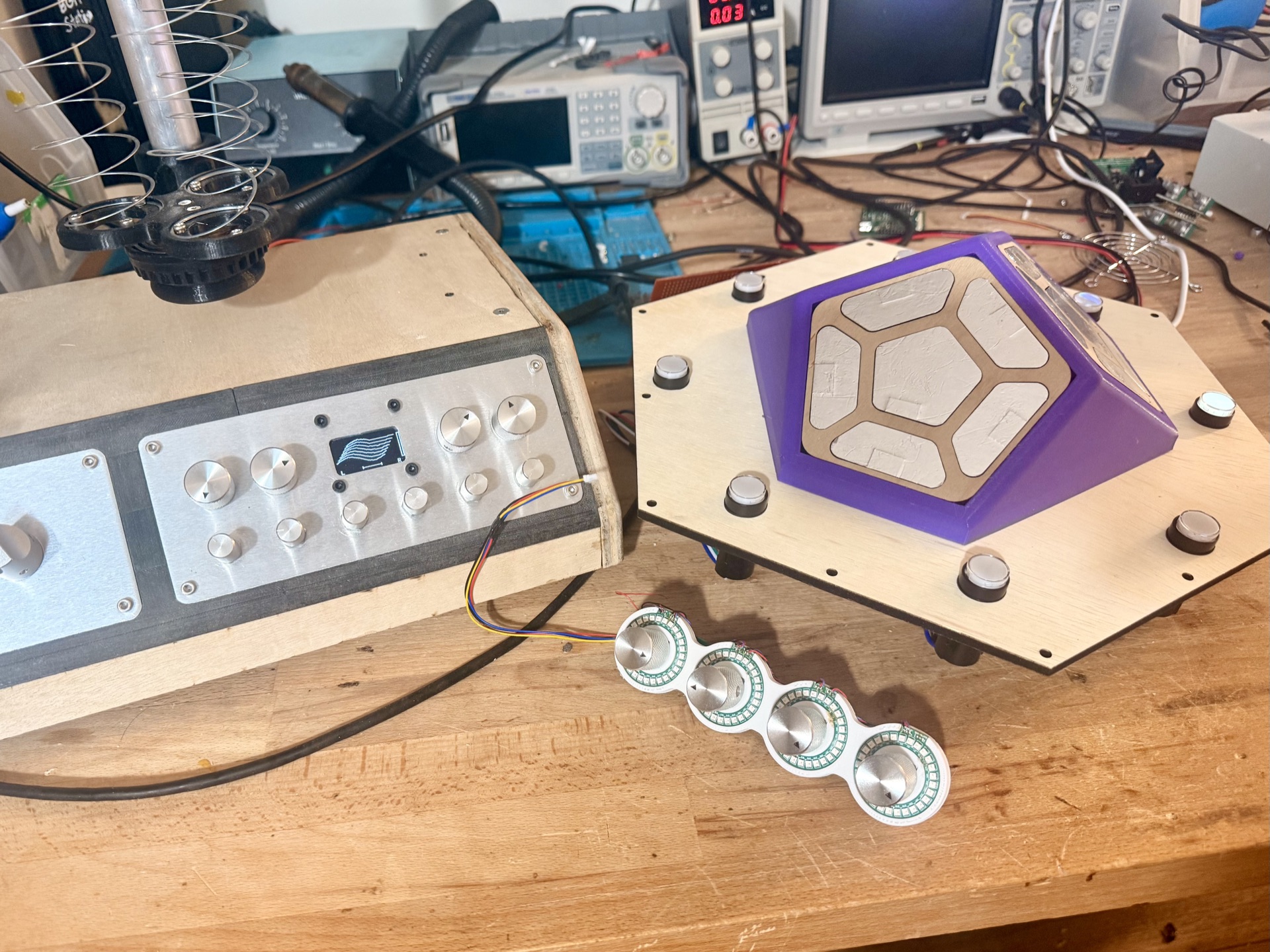
We designed and built three new instruments for the piece. Each has an easy way in and more depth to find, and all three look and feel related, so learning one helps you play the next:
Everything the instruments play stays in one key and one tempo (D Celtic Minor), so there are no wrong notes. Whatever you press sounds good, and three strangers playing at once still sound like they meant it.
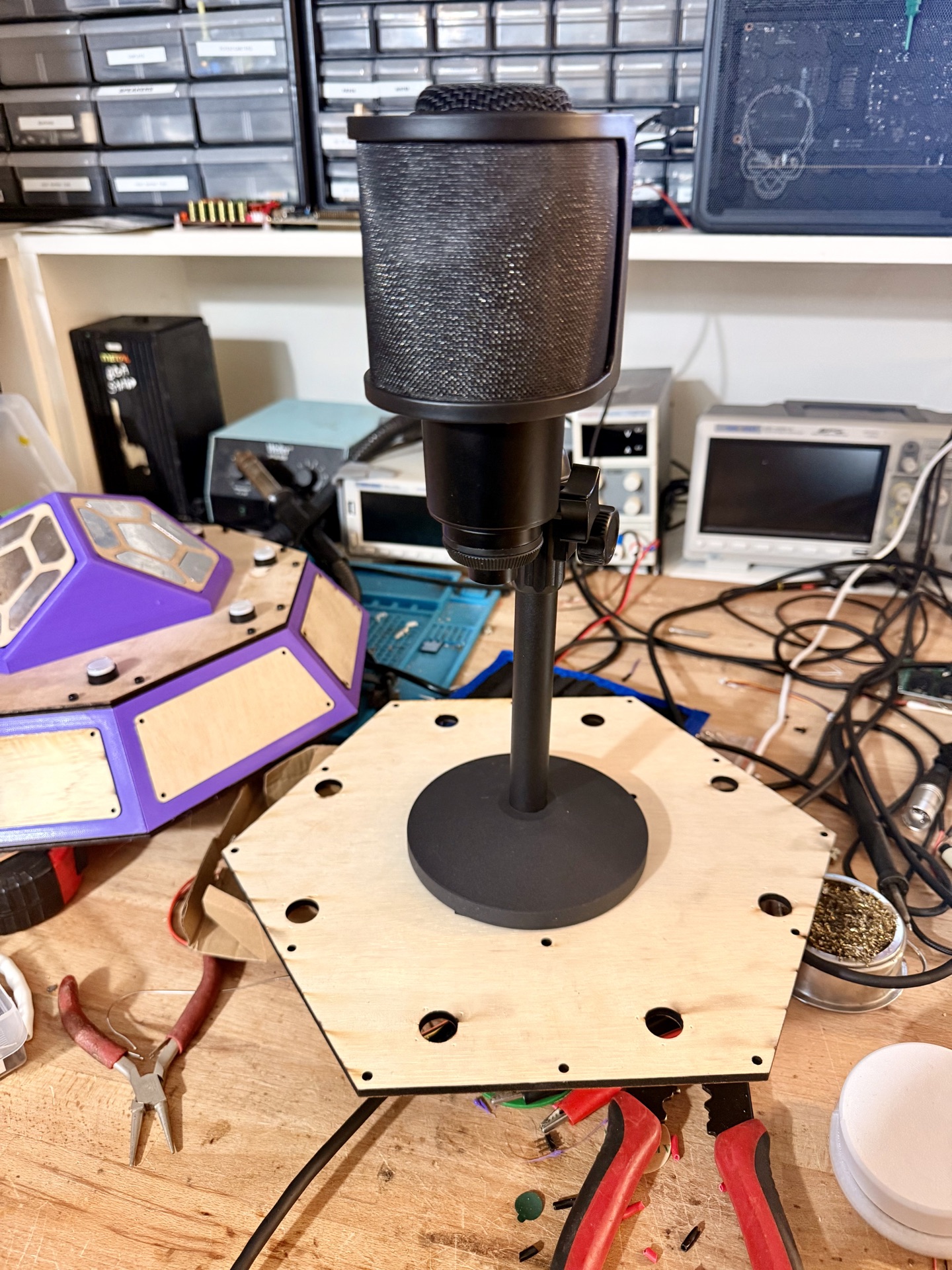
Here is a progress demo of the Dodec-o-tron synth on its own:
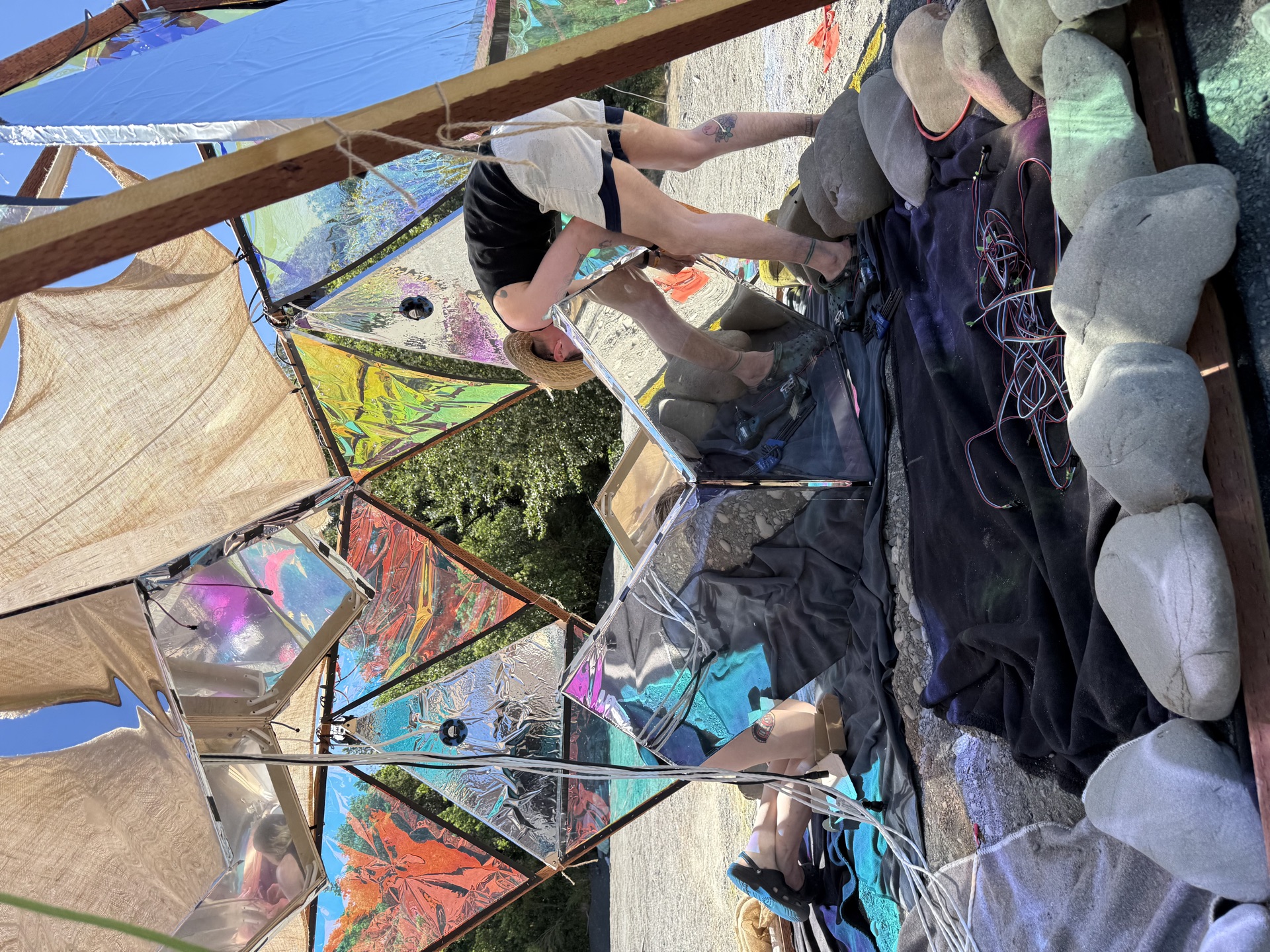
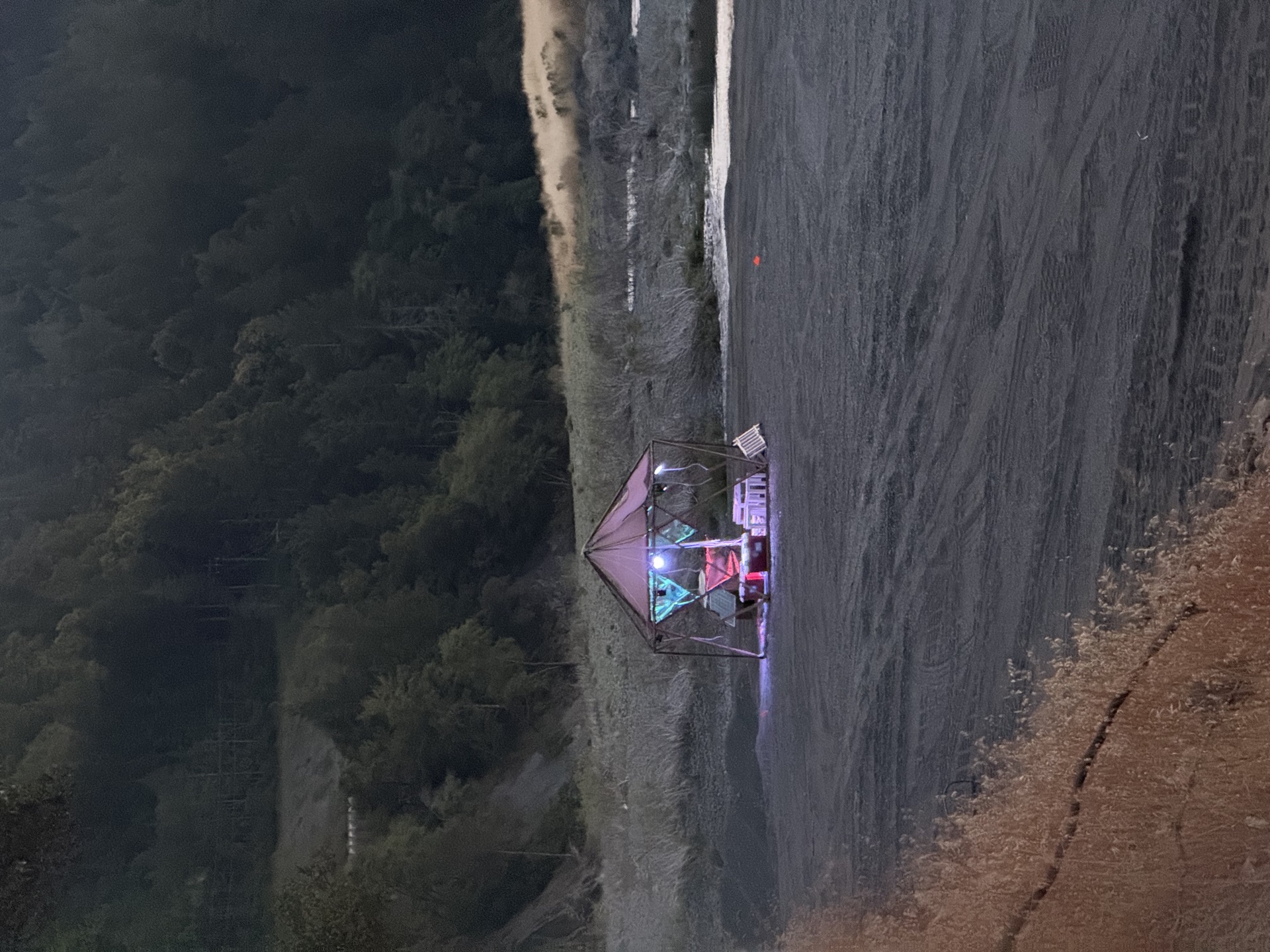
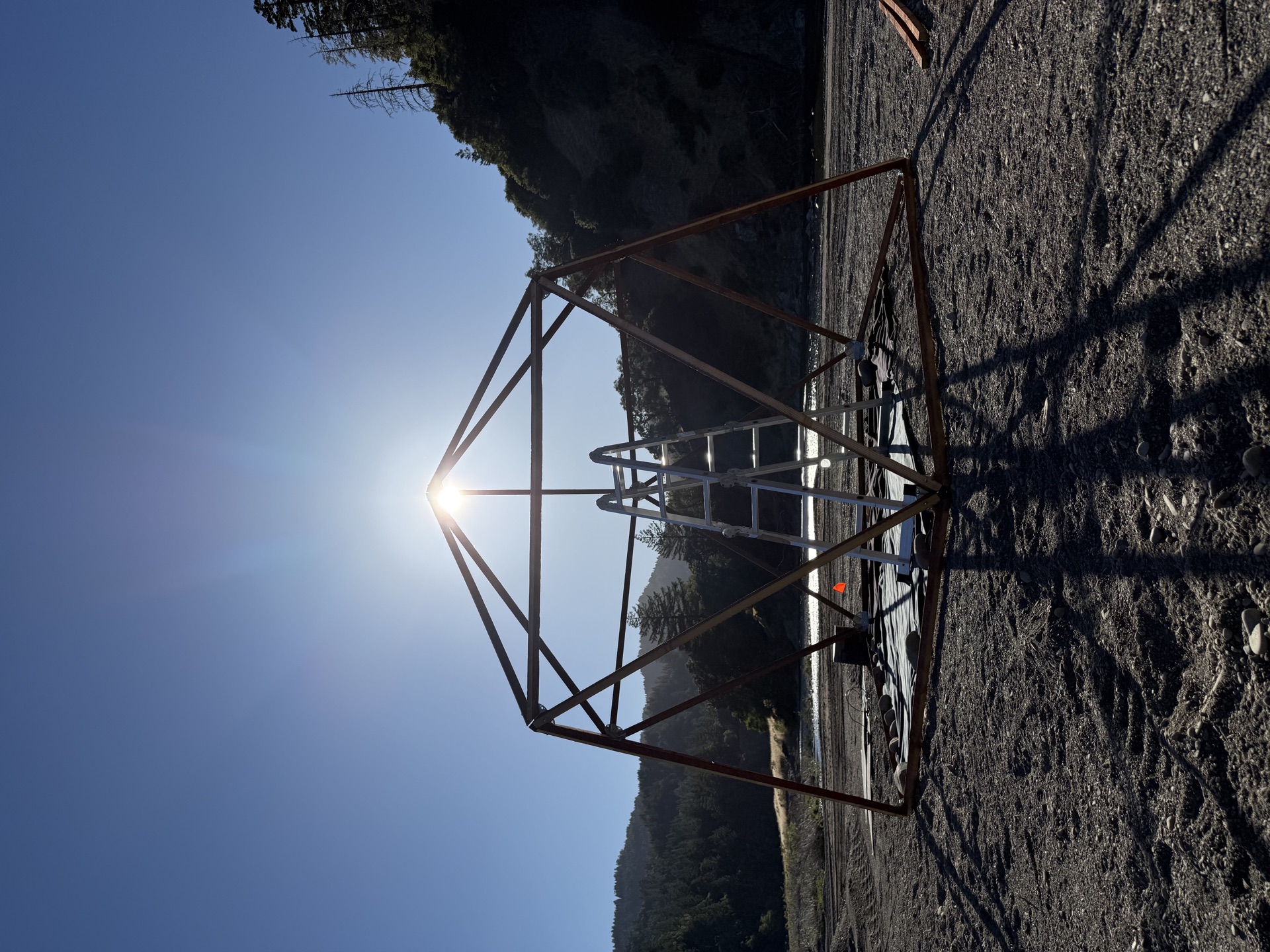
The centerpiece is a mirrored dodecahedron about 4ft wide, hung from the top of a geodesic dome. The dome is roughly 14ft across and 10ft tall, built from thirty wooden struts and covered with hand-painted panels. All thirty edges of the dodecahedron are lined with LEDs, 450 in total. They react to the music and send bolts of light racing out from the corners, with the color set by the note being played. The crystal answers every touch with light.
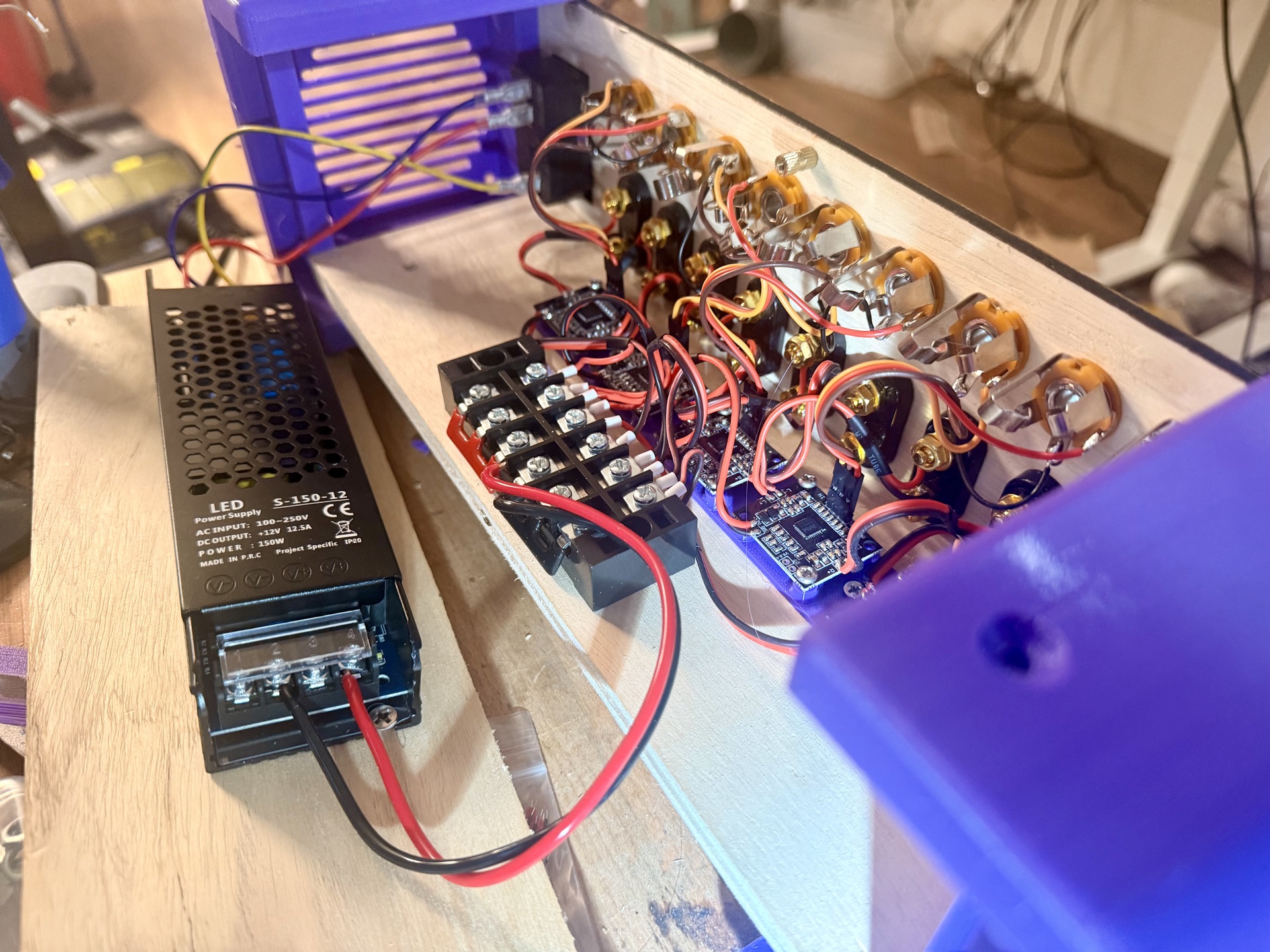
The sound runs on a custom five-channel surround engine I wrote. It drives five transducers fixed to stiff foam panels around the dome, so the music comes out of the walls and wraps around you instead of coming from a pair of speakers. Every instrument and the sculpture is custom electronics running embedded Rust, all kept in sync by a shared MIDI clock. The whole thing runs on battery power and stays on around the clock. When no one is playing, the crystal sits in a soft glow.
I led a core team of five: Calder Moon, Lee Marshal, Sam Zeitlin, Lisa Sindorf, and me. Calder and Lee did a lot of the design and build. Sam shaped the story world of the Institute. Lisa led the play-testing that tuned how the instruments teach a first-time player. Together we took the piece from an alien-crystal idea to a working research station full of instruments that strangers could pick up and play together.